Emble Farms is a mixed farming family business on the North Northumberland coast. We grow cereals such as wheat and barley, rear cattle and sheep, and produce healthy home-grown forage for our livestock. They only eat what we grow, this matters a lot to us.
We do all this with an eye on the long game. Farming innovatively, sustainably, ecologically, biologically and slowly. This not only benefits the environment and protected landscape that we work in, but also improves the quality of our outputs - good food for all of us. You are what you eat!
This issue, our first in a series, introduces Emble beef, our dedication to soil health, and some of our recent habitat enrichment projects.
Our beef
-
We farm in the traditional way. We take our time and let nature take its course. We focus on traditional beef breeds from traditional herds born up in the hills, and bring them down the traditional route to the coast where they thrive.
Just as we are what we eat, so are our livestock.
Our cattle only eat what we grow ourselves.
This might sound obvious but it is increasingly rare. It’s very common practice to supplement and bulk up diets with high carb by-products from the human food chain, including rejected root vegetables and ultra processed baked goods.
We only feed what we grow on our land to support the phenomenal fermentation-based digestive system that makes ruminants so special.
-
We have resown our grass fields with lots of species of grasses, herbs and legumes to give our cattle a very diverse diet outdoors.
When they come inside for the winter, we feed them silage from those fields along with ensiled oats, barley, lucerne (aka alfalfa), vetch and yet more grasses.
We estimate that every mouthful of our silage is made up of between 20 and 25 species of grasses, legumes and herbs.
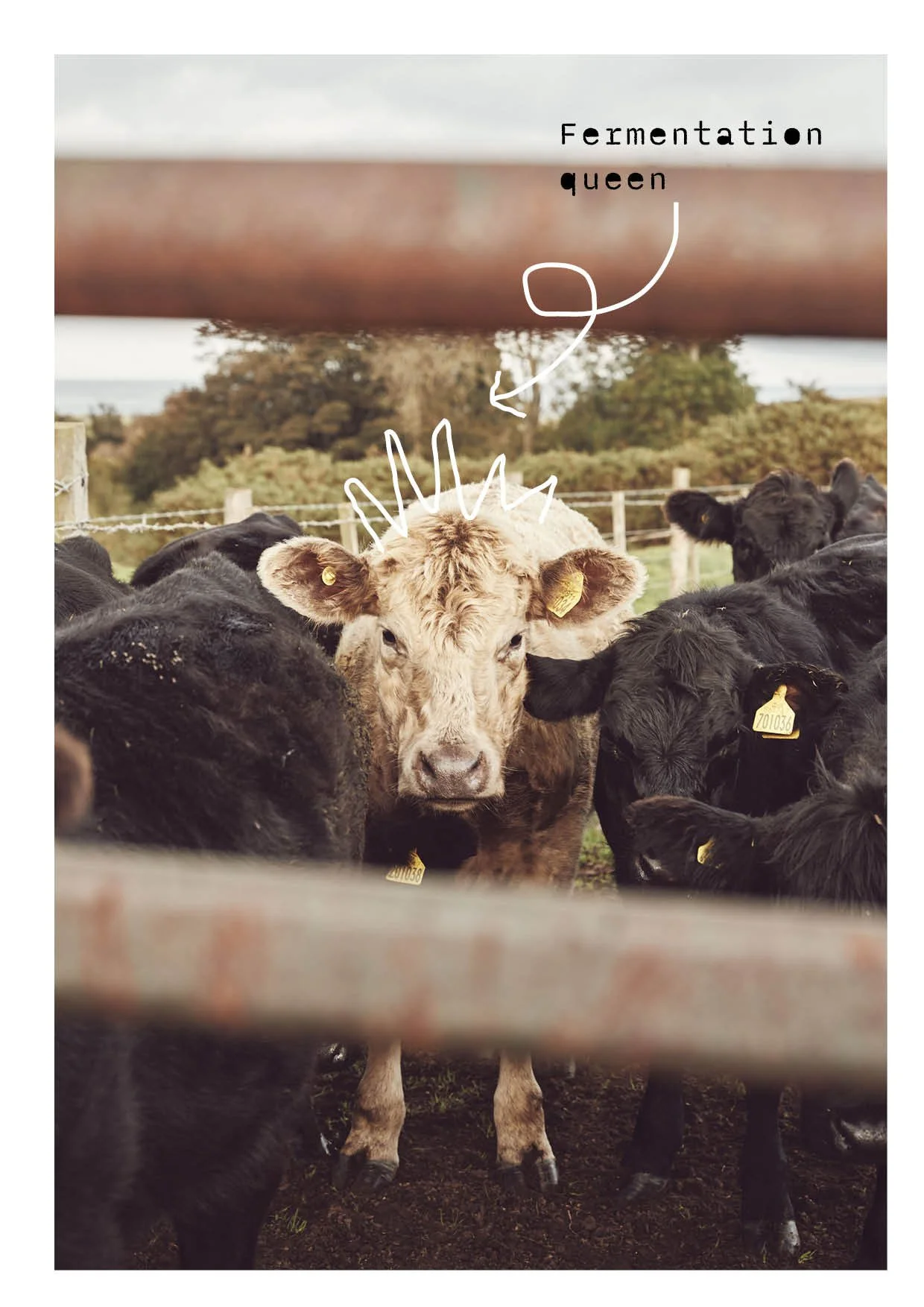
Just as we need diversity in our diets, so do cattle. Cattle are the kings and queens of fermentation so we do our best to turbo charge their tummies, enabling them to break down all the goodness in their forage, to boost their strength, energy and overall health.
We think you can see and taste the difference in the meat. Our cattle aren’t rushed along, the meat has the marbling that speaks to its unforced maturity. We are lucky enough to supply some of the very best butchers in the country and the capital, and work directly with fantastic local butchers including The Herd in Seahouses, and Ni-cholson of Whitley Bay.

Our soil is our holy grail, everything starts there
-
We have a varied rotation where fields are sown with different crops depending on the needs of the soil each year.
Soil has its own rich, living and active network of creatures and life forms that constantly cycle vital nutrients. Plants don’t have tummies to extract nutrients for them, the bugs in a healthy soil do that for them.
Root systems are essential for converting and transferring energy and nutrients into and around the soil. The types of plants and their roots influence the soil’s structure and content. We need a varied mixture of different types of roots to create these diverse networks through the different layers of soil, from the top, and down into the deepest layers, and back up again.
-
Our ‘grass’ pastures have been replaced with diverse ‘herbal leys’. A wonderfully rich and varied mixture of plants that all grow to different heights and with different types and depth of roots, and different mycorrhizal properties transporting nutrients and minerals up, down and around the soil and between plants.
These ley mixes include grasses (fescues, timothy, cocksfoot), legumes (clovers of many heights and colours, vetch, bird’s foot trefoil and lucerne), and herbs (chicory, ribgrass and burnet). This all greatly benefits the soil’s richness and health while also providing our sheep and cattle with a wonderfully nutritious smorgasbord of grazable forage.
-
We also look to boost nutrients in the soil by spreading a super-charged natural fertiliser, produced by our very own cattle, so the cycle continues and is as closed a loop as possible - the livestock benefit from good soil health and put back into it. It’s usual to spread manure on farms as a way of adding fertiliser, but we go a little bit further by, fermenting the bedding while the cattle are on it.
The method is ‘Bokashi’ – a Japanese fermentation technique that converts organic waste (manure and straw bedding) into a nutrient-dense ‘soil feed’. The process works by adding a microbe blend (good bacteria, yeast and fungi) to the cattle bedding where the bugs reproduce rapidly to kickstart fermentation, or pickling. The fermented manure is much more digestable when we spread it onto the fields since it is teeming with microbial life and the tougher fibres in the straw have been softened up (think pickled onion v. raw onion).
The microorganisms, worms and fungi in the soil love this part fermented organic matter and break it down really quickly, feeding on and utilising the carbohydrates (carbon compounds) and proteins (nitrogen compounds like amino acids.)
A delicious, habitable hedging mix and superhighway
-
We try to do our best for the nature that surrounds us on the farm. One way we do this is by planting lots of trees and hedges.
Our hedging, just like everything else we grow, is based on promoting diversity through polycropping or polyculture. Most of the old established hedging around here is dominated by hawthorn leading to a monoculture.
We have recently coppiced very long stretches of old and frail hawthorn hedging to create new, richer habitats for insects, birds and other wildlife. The process of removing the old plants looked brutal, but replanting will allow everything to flourish in the long run.
-
We have carefully considered our planting choices, with longevity and sustainability in mind. Our hedging mix favours a broad range of fast-growing, coppiceable trees including alder, alder buckthorn, aspen, cherry (plum, bird, and wild), crab apple, dogwood, field maple, hazel, hornbeam, spindle, and willow (white, grey, scarlet and osier). We’ll let them grow for five or ten years untrammelled and then coppice them and compost the cuttings.
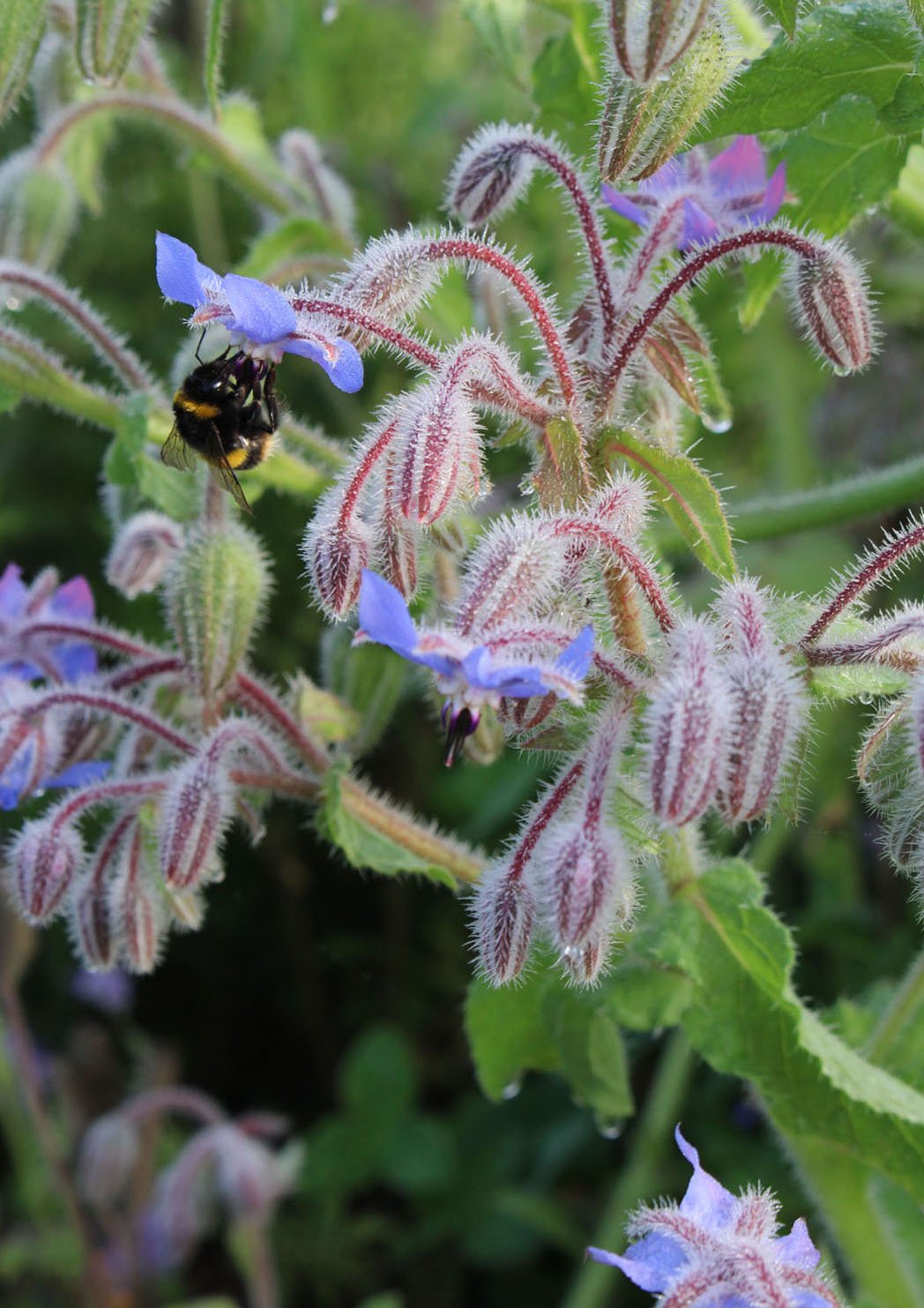
Within that mix there are flowering plants, producing pollen for insects, fruiting plants, and seed producing plants, all sources of food across the changing seasons: blossom in spring, fruit in summer and autumn, and seeds in winter.
-
Alongside the new hedges, we have created long, joined up stretches that allow birds and animals to move around. Combined with wide uncultivated wildflower field margins, ‘beetle banks’ (raised strips of rough grass), and wide strips along the burns that run across the farmland, we have created wildlife corridors, that are as long as a couple of miles, wider than cricket pitches are long and amounting to many hectares.
These habitats, and microhabitats within them, support entire ecosystems from the tiniest insects, small birds and other mammals, up to apex predators, like birds of prey.